

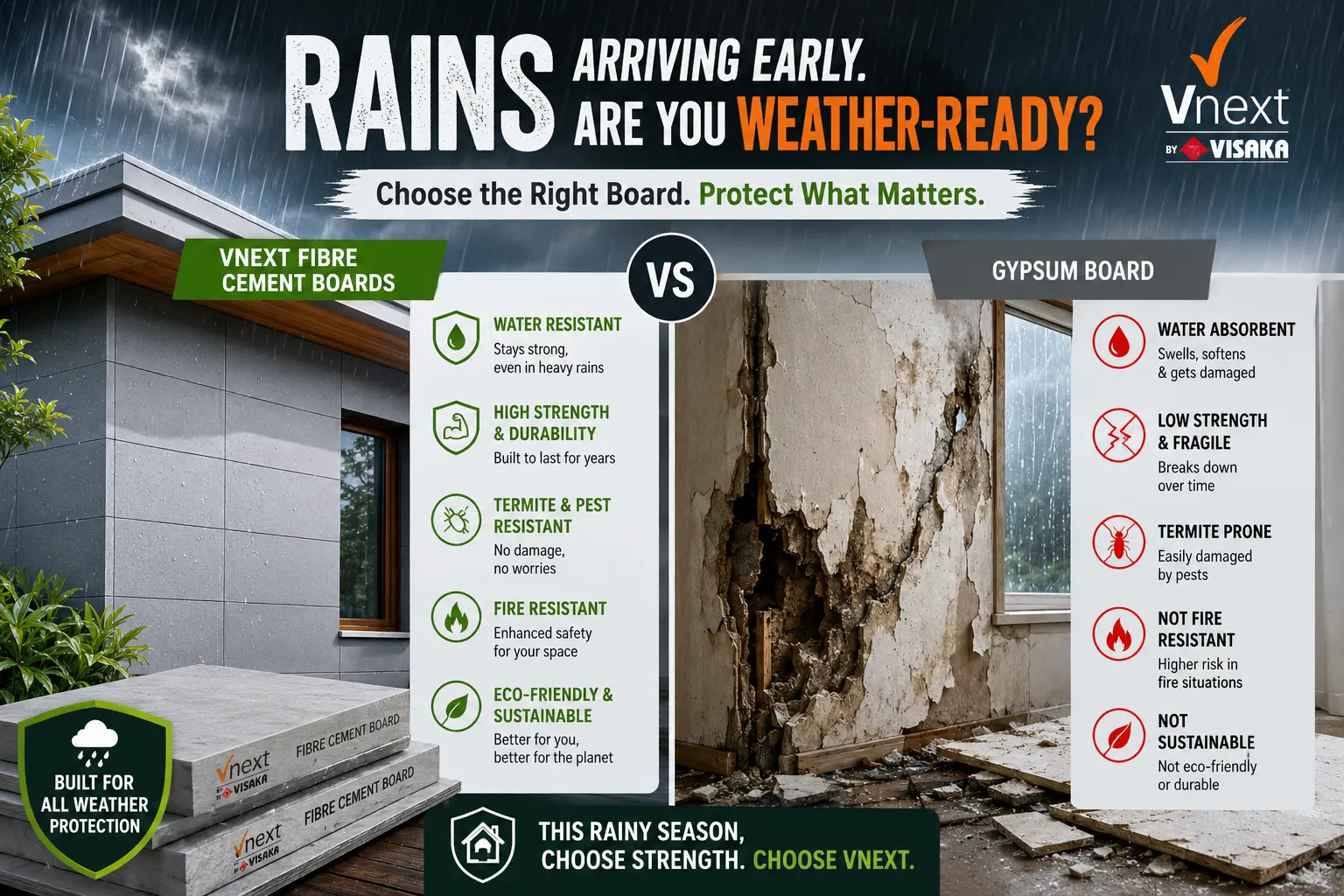
Ah, the refreshing rain. Who doesn’t love the fragrance of petrichor? After a relatively mild summer, rains are always a welcome change that respite and joy. However, we cannot say the same about our buildings and spaces. Torrential rain or any other extreme weather condition can cause irreparable damage to typical construction materials such as wood, plywood, gypsum, etc. However, lately, the construction material industry’s focus has shifted towards novel, unconventional rainwater-resistant construction materials. One such versatile and incredibly weather-resistant material is Vnext fibre cement board. Fibre cement boards, unlike their non-eco-friendly alternatives, are incredibly durable and can withstand moderate to harsh weather conditions. Let us understand where these rainwater-resistant boards stand compared to plywood and gypsum.
Interior Applications
In tropical countries such as ours, rain not just affects the exteriors of a building but can seep in through the walls and wreak havoc on the internal functioning of any structure. Vnext fibre cement boards, through their constitution of sand, cement & cellulose fibre, have been engineered to keep moisture and water damage at bay. They are ideal for numerous interior applications such as wall partitions, shelves, cabinets, and false ceilings. They are especially beneficial for washroom and kitchen walls and partitions as they allow no amount of water to penetrate through. Be it rainwater is trying to perforate the ceiling or excessive moisture dampening the walls, with fibre cement boards, your space remains damage-free and vibrant looking for years on end.
Exterior Applications:
In India, where it rains at least five months a year, people look to build their homes or office spaces with rainwater-resistant construction material, and environment-friendly fibre cement boards do the trick. Exterior-grade applications for these multipurpose weather-proof boards and planks include external cladding, duct covering, façade building, garden fencing, and gate cladding, among others. Many construction materials are marketed as ‘rainwater-resistant’, but there are only so many monsoons they can endure and still function damage-free. Of course, how can one trust a product, unless one does a comparative analysis of its alternatives? Let us understand how the Vnext fibre cement board is the ideal gypsum and plywood alternative all year long but more so during the rainy season.
FCB Vs Plywood:
While plywood may offer some aesthetic value to your space, it has minimal resistance to water damage. While it may sustain a few rainy days, plywood sheets swell up, allowing water to escape through the layers, making its way into the drywall, causing cracks on the surface and in the interiors of your living spaces. Vnext fibre cement boards owing to their pre-cured nature, sturdy build, and moisture-resistant properties, are already very immune to water injury and do not allow moisture to penetrate. Plywood after water damage not only reduces the aesthetic of your space which costs a heavy wallet to repair but also lays the red carpet for insect infestation.